|
|
Big Craters
|
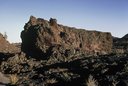
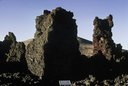
Big Craters is a great example of how a fissure eruption gradually changes from a long curtain of fire to a single main vent. The fissure beneath Big Craters probably extended from the Spatter Cones to North Crater. Eruptions took place at many different points along the fissure. Big Craters is called a "cinder cone complex" because it's made up of as many as nine separate vents. Some of the smaller vents sit inside of larger ones. The cinders that make up Big Craters are varying shades of red, brown, and black. Some cinders are even iridescent purple and gold. Red cinders, like red lava rock, are the result of iron oxidization when the cooling cinders come in contact with steam. The iridescence is caused by a microscopically thin layer of volcanic glass that formed when the super hot cinders hit the cool air.
Source: National Park Service
|
|



 Home
 Login
 Album list
 Last uploads
 Last comments
 Most viewed
 Top rated
 My Favorites
 Search