|
|
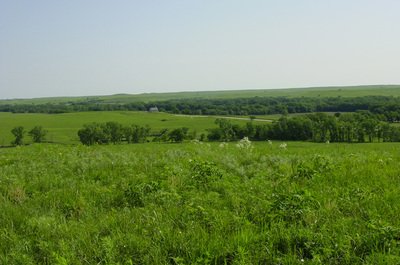
Prairie in Early June
|
Tallgrass prairie once covered more than 140 million acres of the United States, from Indiana to Kansas and from Canada to Texas. Nearly all of it is gone, plowed under for agriculture. An ancient past survives in the irreplaceable Flint Hills tallgrass.
In prehistory, what is now a sea of grass, was once a shallow sea of water. Two hundred to 300 million years ago the gray and white rock limestone and steel tough chert commonly called "flint" began to form from this Permian Sea floor. The result was shallow, rocky land considered unsuitable for plowing but excellent for pasture. The natural prairie cycle of weather, wildfires, and animal grazing -- once bison, now cattle -- has sustained the tallgrass prairie and its diverse plant and animal species ever since.
Source: National Park Service
|
|



 Home
 Login
 Album list
 Last uploads
 Last comments
 Most viewed
 Top rated
 My Favorites
 Search