|
|
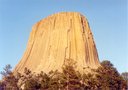
Splatter Cone
|
These "miniature" volcanoes form during the final stages of a fissure type eruption. As gases escape and pressure is released, the lava becomes thick and pasty. When these sticky globs of lava plop to the surface, they pile up to form spatter cones. Most spatter cones are much smaller than cinder cones. They are rarely more than 50 feet high. The steep sides of a spatter cone protect the ice and snow inside from the hot summer sun. One spatter cone, Snow Cone, has been known to hold ice all summer.
Source: National Park Service
|
|



 Home
 Login
 Album list
 Last uploads
 Last comments
 Most viewed
 Top rated
 My Favorites
 Search